
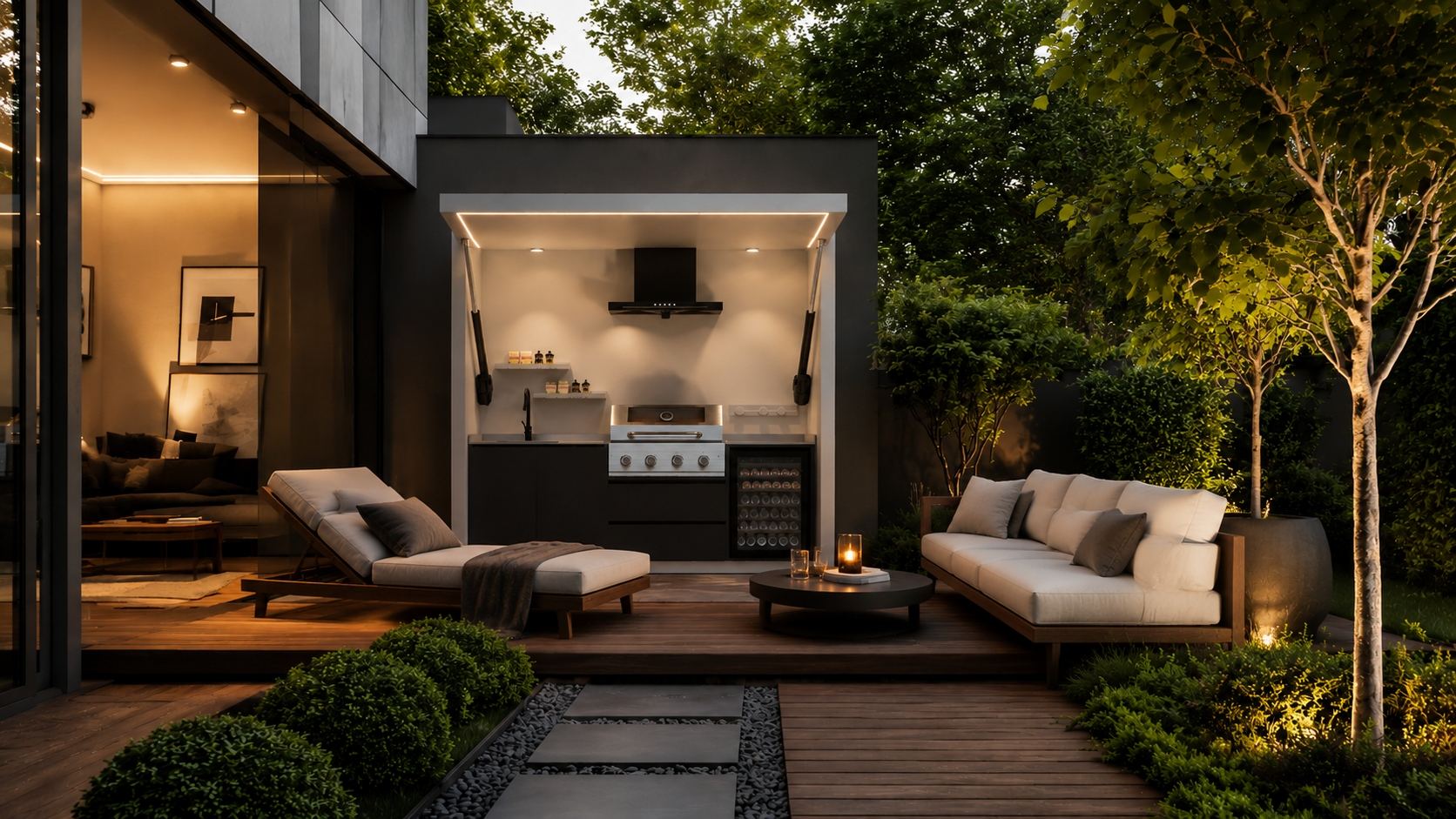
Building a traditional outdoor kitchen for a resort or restaurant has historically been a complex, expensive, and time-consuming undertaking. Conventional outdoor cooking facilities require architects, structural engineers, masons, plumbers, electricians, and equipment suppliers — each working in sequence over a construction timeline that typically spans three to six months. During this period, the outdoor dining area is effectively an active construction zone, generating noise, dust, and disruption that directly impacts guest experience and revenue. For a resort in peak season or a restaurant looking to expand outdoor seating capacity for the summer, this timeline is often simply not viable. The cost of custom masonry, weatherproofing, and commercial kitchen equipment integration can easily reach tens of thousands of dollars before factoring in project management overhead and construction delays.
The Modular Advantage: Factory-Built, Site-Ready
SunnyJoy modular outdoor kitchens fundamentally change this equation by shifting the majority of construction from the unpredictable outdoor site to our controlled factory environment in Foshan, China. Each kitchen is fully assembled, tested for functionality, and quality-inspected before it leaves our 30,000 square meter production facility. When the unit arrives at your resort or restaurant, it requires only placement on a level surface, connection to existing utility lines, and a final operational test — a process that typically completes within one day. The aluminum alloy frame and cabinets, fabricated from T5-6063 structural-grade material, arrive fully powder-coated or anodized with zero on-site painting or finishing required. The stainless steel countertops, sinks, range hoods, integrated grills, and refrigeration units are all pre-installed and wired, eliminating the coordination of multiple trades on site.
Real-World Impact for Resorts and Restaurants
Consider a beachfront resort in Phuket that wants to add a poolside grill station for the upcoming high season. With a traditional build, the resort would need to begin planning six months in advance, navigate local construction permits, coordinate multiple contractors during the monsoon off-season, and hope for completion before the first December guests arrive. With a SunnyJoy modular outdoor kitchen, that same resort can place an order four weeks before the season starts, receive the fully assembled unit, connect it to the existing gas and electrical infrastructure, and begin serving grilled seafood poolside within 48 hours of delivery. The financial implications are significant: the resort avoids six months of construction-related disruption to its pool area, eliminates architectural and engineering design fees, and begins generating incremental food and beverage revenue almost immediately after deciding to proceed.
Quick Setup Versus Custom Builds: A Cost Comparison
Beyond the obvious speed advantage, modular outdoor kitchens deliver compelling cost savings when compared to traditional custom-built alternatives. A fully custom masonry outdoor kitchen for a restaurant terrace typically costs between $25,000 and $60,000 for the structure alone, with commercial-grade equipment adding another $10,000 to $30,000 depending on specifications. Professional design fees, permit applications, and project management typically add 15 to 25 percent to the total project cost. A SunnyJoy modular outdoor kitchen, by contrast, starts at approximately $6,360 for the Standard configuration and reaches $9,660 for the fully featured Plus 2.0 model — and these are the complete prices including the grill, range hood, sink, refrigeration, storage, and lighting. Because the unit is self-contained and classified as movable equipment in most jurisdictions, building permits are often not required, eliminating another layer of cost and delay.
Return on Investment: Why Modular Makes Financial Sense
The return on investment for a SunnyJoy modular outdoor kitchen extends well beyond the initial purchase savings. A resort or restaurant that deploys a modular outdoor kitchen can begin earning revenue from outdoor dining services weeks or months earlier than a comparable custom-built project would allow. The portability of the unit means it can be relocated as property layouts evolve — moved from the main pool to a new villa wing, or from a seasonal terrace to an indoor event space during winter months. Maintenance costs are lower because the aluminum construction eliminates the ongoing expense of repainting, sealing masonry, or replacing rusted steel components. And when properties are renovated or rebranded, the kitchen can simply be repositioned rather than demolished and rebuilt. For hospitality operators who measure every dollar per square meter of revenue-generating space, the ability to quickly deploy, relocate, and maintain a professional outdoor cooking facility represents a strategic operational advantage that traditional construction simply cannot match.